

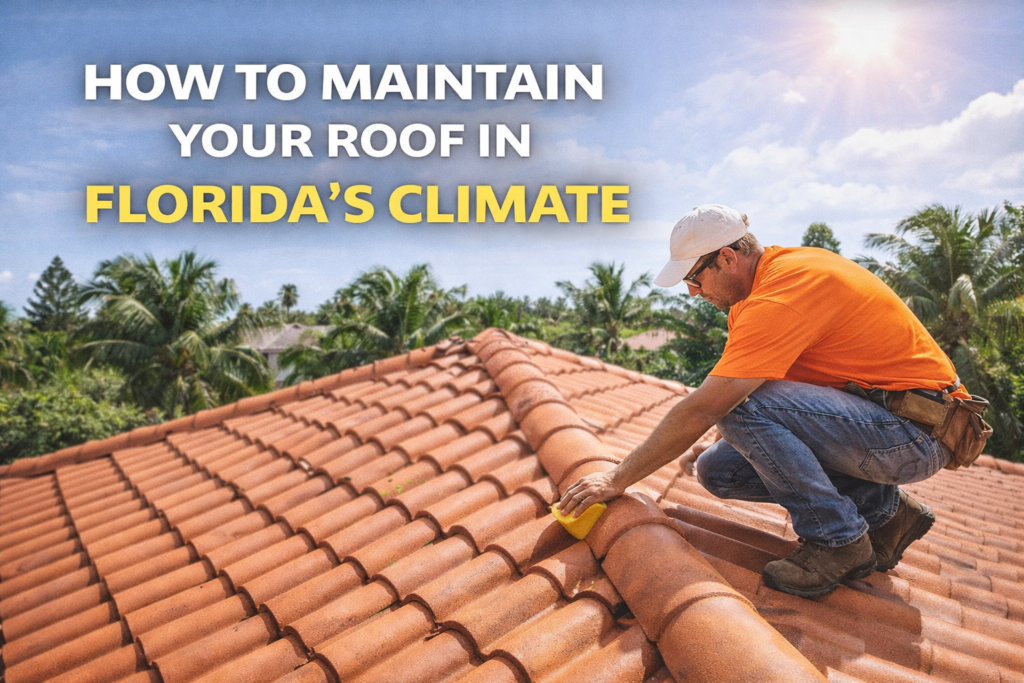
Published by Tampa Premier Roofing | Tampa, FL
Most Tampa homeowners think about their roof twice: when they buy the house and when it starts leaking. Everything in between — the years of exposure to Florida’s relentless sun, humidity, tropical storms, and heavy afternoon rains — happens without much attention until something goes wrong.
That is an expensive way to own a roof. A Tampa roof that receives regular, informed maintenance can add five to ten years to its useful life compared to one that is ignored until a problem surfaces. That extra lifespan on a $12,000–$20,000 roof represents real money — and the maintenance cost to get there is a fraction of that.
This guide covers everything a Tampa homeowner needs to know about maintaining a roof in Florida’s specific climate — from the seasonal maintenance schedule to the common mistakes that cut roof life short, to when it is time to call a professional versus handle something yourself. If you want a professional eye on your roof’s current condition, Tampa Premier Roofing offers free inspections with full photo documentation — no obligation, just honest answers.
Why Roof Maintenance Is Different in Florida Than Anywhere Else
Roofing maintenance advice written for the general American homeowner does not fully apply in Tampa. Florida’s climate creates a specific set of stressors that require a specific maintenance approach. Understanding what makes Florida roofing different is the starting point for maintaining yours correctly.
Ultraviolet Radiation
Tampa receives more than 240 sunny days per year, and Florida’s lower latitude means UV radiation is more intense than in northern states even on equivalent sunny days. UV is one of the primary degradation mechanisms for asphalt shingles — it breaks down the petroleum-based oils in the asphalt, causing shingles to dry out, become brittle, and lose their protective granule coating. A shingle roof in Tampa ages faster under the sun than the same roof in Ohio or Michigan, regardless of storm activity.
The practical implication: Tampa homeowners should not assume their asphalt shingle roof has the 25–30 year life suggested by manufacturer ratings. Realistic lifespan in Florida’s UV environment is 18–22 years for quality architectural shingles. Maintenance that reduces UV-related aging — keeping the roof clean, maintaining proper attic ventilation to reduce heat buildup, and catching granule loss early — is particularly high value in Florida.
Humidity and Biological Growth
Florida’s average relative humidity consistently runs above 70%, and the combination of warmth and moisture creates ideal conditions for algae, mold, mildew, and moss growth on roofing surfaces. The black streaks visible on many Tampa roofs are Gloeocapsa magma, a cyanobacteria that feeds on the limestone filler in asphalt shingles and spreads across the roof surface over time.
This growth is not merely cosmetic. Algae traps moisture against the shingle surface, accelerating the granule loss and material degradation that shortens shingle life. Moss and lichen growth goes further — the root structures of moss physically penetrate and dislodge shingle granules, and lichen bonds to the shingle surface in a way that tears off granule coating when removed. Managing biological growth is one of the highest-value maintenance activities for Tampa roofs.
Hurricane and Tropical Storm Activity
Tampa sits in one of Florida’s most active hurricane corridors. Even storms that do not make direct landfall in Tampa regularly bring sustained winds of 40–60 mph and gusts well above that — enough to lift shingle edges, stress flashing seals, and work fasteners loose in ways that are not immediately visible but compromise the roof’s performance in subsequent weather events. Post-storm inspection is a maintenance activity, not just a damage assessment.
Heavy Seasonal Rainfall
Tampa’s rainy season runs May through October and delivers concentrated, intense rainfall — often 2–4 inches in a single afternoon storm. This rainfall volume stresses every drainage component of the roofing system: gutters, downspouts, roof drains, and valleys. Maintenance that keeps drainage systems clear and functional prevents the back-pitching and overflow conditions that lead to water infiltration at the roof’s lower edges.
The Tampa Roof Maintenance Calendar
The most effective approach to roof maintenance in Tampa is a structured seasonal calendar. Here is what each period of the year should include:
February and March: Pre-Season Inspection and Preparation
The window between the end of Florida’s winter dry season and the beginning of hurricane season is the single most important maintenance period for Tampa homeowners. February and March offer mild weather, low rainfall, and four to five months before peak storm activity — enough time to identify and address any issues before hurricane season stress-tests the roof.
Pre-season maintenance should include:
- Professional roof inspection — a licensed contractor on the roof, assessing the full surface, all penetrations, flashing, gutters, and attic condition
- Gutter cleaning and inspection — remove all debris accumulated over fall and winter, check for sagging, separation from fascia, or damage
- Algae and moss treatment if biological growth is present — spring is the right time to treat before the growth season accelerates in summer heat and humidity
- Tree trimming — branches within six feet of the roof surface should be cut back before storm season. Overhanging branches scrape the roof in wind events and drop debris that clogs gutters and traps moisture
- Flashing inspection at all penetrations — chimney, skylights, pipe boots, and wall transitions should be checked and resealed where needed
- Attic ventilation check — confirm intake and exhaust are clear and functioning before summer heat buildup begins
June Through August: Active Monitoring During Storm Season
During Tampa’s peak storm season, active monitoring is more important than scheduled maintenance. The key activities are:
- Post-storm ground inspection after every significant weather event — walk the perimeter of the home, check gutters for granule accumulation, look for any visible missing or damaged shingles
- Attic check after major storms — even a brief look for moisture, active dripping, or new staining can catch infiltration early
- Gutter clearing after every significant storm — storms deposit significant debris in gutters, and clogged gutters during the rainy season create back-pitch conditions at the eaves
- Photograph any visible exterior damage immediately after a storm — before any cleanup — to establish documentation for potential insurance claims
Do not schedule major roof work during peak storm season if it can be avoided. Contractors are busier, the weather is less predictable for scheduling, and the risk of a rain event interrupting an open roof installation is highest during summer months.
October and November: Post-Season Assessment
After hurricane season ends, a post-season assessment identifies any cumulative damage that occurred over the summer months — particularly the slower-developing issues that may not have been obvious immediately after individual storms:
- Professional inspection if any significant storms affected Tampa — many homeowners skip this if no single storm caused obvious damage, not realizing that cumulative wind stress from multiple events has compromised flashing seals and shingle adhesion
- Gutter cleaning and downspout clearing — fall leaf drop from deciduous trees in Tampa neighborhoods clogs gutters quickly
- Check for algae spread — the growth that started in spring is at its most developed by fall and should be assessed and treated if significant
- Attic moisture check before the cooler months — any moisture accumulation from the rainy season should be addressed before the lower temperatures of winter create condensation issues
December and January: Low-Activity Monitoring
Florida’s winter is the lowest-stress period for Tampa roofs — cooler temperatures, lower humidity, and minimal storm activity. This is the best time for:
- Any significant repairs that were identified in the fall assessment but not immediately urgent — contractor scheduling is better and weather conditions are more stable
- Tree work — trimming overhanging branches is easier with less foliage and is better done in the dormant season
- Cleaning moss or lichen if present — cooler, drier conditions are better for treatment application and drying
The Most Important Roof Maintenance Tasks for Tampa Homes
1. Keep Gutters Clean and Functional
In Florida’s high-rainfall environment, gutters are a critical component of the roofing system — not an afterthought. Clogged gutters during Tampa’s rainy season back water up at the eaves, pushing moisture under shingles and against fascia boards. Over time this leads to fascia rot, soffit damage, and water infiltration at the roof’s lowest edge — one of the most expensive types of damage to repair.
Tampa homes surrounded by oak trees — common throughout Hillsborough County — need gutters cleaned at minimum twice per year: once in spring before rainy season and once in fall after peak leaf drop. Homes with heavy tree coverage may need quarterly cleaning. Gutter guards can help but are not a substitute for periodic inspection — they can trap debris on top of the screen and require their own maintenance.
Functional gutters also means properly sloped — water should flow toward downspouts without ponding in any section — and securely attached to the fascia. Gutters that have pulled away from the fascia during a storm allow water to run directly down the exterior wall rather than being carried away from the foundation.
2. Manage Biological Growth
Algae, moss, and lichen are active threats to asphalt shingle lifespan in Tampa’s climate, and managing them is one of the highest-ROI maintenance activities available to Tampa homeowners. Left untreated, algae spread can cover an entire roof within a few years and accelerate shingle aging measurably. Moss and lichen growth causes physical granule loss and can void manufacturer warranties on some shingle products.
For algae — the black streaking most common on Tampa roofs — a solution of water and sodium hypochlorite (bleach) or a commercial roof cleaning product applied from a low-pressure sprayer will kill active growth. Allow the solution to dwell for 15–20 minutes then rinse gently. Never use a pressure washer on asphalt shingles — the high pressure strips granules and voids most warranties.
For prevention, zinc or copper strips installed along the ridge cap leach metal ions down the roof surface during rain events, inhibiting biological growth. Many roofing manufacturers now offer algae-resistant shingles with copper-infused granules — if your roof is approaching replacement, specifying algae-resistant shingles is a maintenance-reducing upgrade worth considering in Florida’s climate.
For moss or lichen — which physically bond to the shingle surface — removal requires more care. A licensed contractor should assess significant moss or lichen growth before any treatment attempt, as aggressive removal can cause more granule loss than leaving it in place.
3. Inspect and Maintain Flashing
Flashing failures are the single most common source of roof leaks in Tampa homes. Sealants around flashing crack and dry out faster in Florida’s UV-intense climate than in most other states. Wind events stress and bend flashing. Poor original installation creates gaps that worsen over time.
Every homeowner should know where their roof’s flashing locations are — typically around any chimney, at all vent pipe penetrations, along any roof-to-wall transitions, and in valleys where two roof slopes meet. These are the areas to visually inspect from the ground after any significant storm and to have a contractor inspect in detail annually.
Pipe boots — the rubber collars that seal around plumbing vent pipes — deserve special attention in Florida. The rubber degrades faster than the surrounding shingles in intense UV exposure and typically needs replacement every 10–15 years even on a roof with many years of remaining shingle life. A failed pipe boot is a relatively inexpensive fix ($200–$400 in most cases) that prevents a recurring leak that can cause significant interior damage over time.
4. Maintain Attic Ventilation
Proper attic ventilation is one of the most overlooked aspects of roof maintenance in Tampa, and one of the most consequential. An attic that is not properly ventilated reaches temperatures exceeding 160 degrees Fahrenheit in Florida summers — heat that bakes the underside of the roof decking and accelerates the degradation of the shingles above it. Studies have shown that inadequate ventilation can reduce shingle lifespan by 25% or more in hot climates.
Proper ventilation requires both intake — typically at the soffit vents along the eave — and exhaust — typically at ridge vents or power ventilators at the roof peak. If intake vents are blocked by insulation pushed against the soffit from inside the attic, the ventilation system fails even if all the vents are present and open. A periodic attic inspection should confirm that insulation is not blocking soffit intake vents.
Signs of inadequate attic ventilation in a Tampa home include: a noticeably hot attic even in mild weather, peeling paint on the underside of the roof decking, excessive moisture condensation in the attic during cooler months, and shingles that are showing age-related degradation faster than expected for their age. All of these signal a ventilation issue that should be corrected as part of a roof maintenance program.
5. Keep Trees Trimmed Back
Overhanging branches are a persistent maintenance problem for Tampa roofs — and a manageable one. Branches that contact the roof surface during wind events scrape granules from shingles with every movement, accelerating wear in a focused area. Fallen branches and constant leaf debris from overhanging trees clog gutters, trap moisture against the roof surface, and create conditions for biological growth.
The standard recommendation is to keep all branches at least six feet away from the roof surface. In practice this means regular trimming — Tampa’s warm climate promotes fast tree growth, and a branch that was safely clear of the roof last spring may be contacting it by fall. February and March are the ideal months for significant tree work before storm season begins.
Large trees near the home also represent a direct storm risk. A tree within falling distance of the house should be assessed for health and structural integrity by a certified arborist — a dead or structurally compromised tree in Tampa’s hurricane corridor is a serious liability. The cost of tree removal is significantly less than the cost of removing a fallen tree from a damaged roof.
6. Schedule Professional Inspections Annually
The single most valuable thing a Tampa homeowner can do for their roof is have it professionally inspected every year — or at minimum before hurricane season and after any significant storm. A trained contractor on the roof catches problems that are invisible from the ground: lifted shingle edges with broken seals, early-stage flashing failures, soft spots in the decking, failing pipe boots, and the first signs of age-related deterioration that can be addressed cheaply before they become expensive.
The cost of an annual professional inspection at a company like Tampa Premier Roofing is zero — we provide free inspections with photo documentation as a standard service. The cost of the problems those inspections catch before they become emergencies is typically a fraction of what they would cost if left to develop.
Common Roof Maintenance Mistakes Tampa Homeowners Make
Pressure Washing the Roof
This is the most damaging DIY maintenance mistake we see on Tampa roofs. High-pressure washing removes granules from asphalt shingles — the very granules that protect the underlying asphalt from UV exposure. A single pressure washing session can remove years of granule life and void the manufacturer warranty on the shingles. If your roof needs cleaning, use a low-pressure wash with an appropriate chemical solution or hire a contractor who specializes in soft-wash roof cleaning.
Ignoring Minor Issues
A cracked pipe boot. A small area of lifted flashing. A few missing shingles in one corner. These feel like minor issues, and individually they are — a $300 repair each. Left through a Tampa rainy season, each one becomes a pathway for water infiltration that rots decking, soaks insulation, and potentially enables mold growth. The $300 repair becomes a $2,000–$5,000 repair. The maintenance math in Florida’s climate favors addressing small issues immediately.
Skipping Post-Storm Inspections
Many Tampa homeowners only think about their roof after it starts leaking — which means the damage has already progressed to the point where water is reaching interior surfaces. A post-storm inspection after any significant weather event identifies damage at the earliest possible stage, when repair costs are lowest and before the next rainstorm compounds the problem. The habit of doing a quick ground-level inspection after every significant storm, followed by a professional inspection after any storm that brought sustained winds above 50 mph, is one of the most cost-effective maintenance practices available.
Letting Insurance Lapse or Going Underinsured
Maintenance is not just about the physical roof — it includes maintaining proper insurance coverage. In Florida’s market, this means periodically reviewing your policy to confirm you have replacement cost value (RCV) coverage rather than actual cash value (ACV), that your coverage limits reflect current replacement costs (which have increased significantly with material and labor inflation), and that you understand your hurricane deductible. A well-maintained roof with inadequate insurance is still a financial risk when the next major storm hits Tampa.
When to Call a Professional vs Handle It Yourself
Some roof maintenance tasks are appropriate for capable homeowners. Others require a licensed professional. Here is how to think about the distinction:
DIY-Appropriate
- Gutter cleaning from a stable ladder — provided you are comfortable with ladder safety and your roof pitch is not extreme
- Ground-level post-storm inspection and photography
- Algae treatment with a pump sprayer from the ground or a low-pitch section of roof — only if you can do so safely without walking on the roof
- Trimming overhanging branches within safe reach from a ladder
- Attic inspection for ventilation and moisture — accessible from inside the home
Always Call a Professional
- Any work that requires walking on the roof — getting on a Florida roof without proper safety equipment and roofing experience is genuinely dangerous
- Flashing repair or replacement — improper flashing work creates new leak points and can worsen the original problem
- Shingle replacement — matching and integrating replacement shingles into an existing roof requires experience to do correctly
- Pipe boot replacement — a straightforward job for an experienced contractor, a common source of additional damage when attempted by homeowners
- Any situation involving soft spots, sagging, or structural concerns — these require immediate professional assessment
- Post-storm inspection after any major weather event — the value of an independent professional assessment before filing an insurance claim justifies the call every time
How a Maintenance Program Affects Your Roof’s Lifespan and Insurance
A documented maintenance program — professional inspections on record, repairs completed promptly, gutters cleaned seasonally — does more than extend the life of your roof. It creates a paper trail that matters in two important situations.
First, when filing an insurance claim: a carrier that tries to attribute storm damage to neglect or lack of maintenance is harder to dispute without evidence of regular care. Inspection records, repair receipts, and gutter cleaning documentation show that the roof was properly maintained and that storm damage is the cause of the current condition — not deferred maintenance.
Second, when selling the home: maintenance records for a roof are meaningful to buyers and their inspectors. A roof with documented annual inspections and prompt repairs is a significantly more credible asset than an equivalent roof with no maintenance history. In Tampa’s competitive real estate market, documented roof maintenance can be a meaningful differentiator.
At Tampa Premier Roofing, every inspection we complete produces a written report with photos that you own and can file with your home records. Over years of annual inspections, you build a documented history of your roof’s condition that serves you in both insurance and resale situations.
Frequently Asked Questions
Q: How often should I have my Tampa roof professionally inspected?
Every year as a minimum for roofs over 10 years old. Before hurricane season — February through April — is the ideal timing. Also schedule an inspection after any significant storm event, particularly one with sustained winds above 50 mph. For roofs over 15 years old, twice-yearly inspections are worth considering given the accelerated deterioration Florida’s climate causes in the later years of a shingle roof’s life.
Q: Can I clean my roof myself in Tampa?
Limited DIY cleaning is possible — a low-pressure chemical application for algae treatment can be done from the ground or a low-pitch section with a pump sprayer. What you should never do is pressure wash asphalt shingles. High-pressure washing removes granules, voids warranties, and accelerates aging. For significant biological growth or any cleaning that requires getting on the roof, hire a licensed contractor who specializes in soft-wash roof cleaning.
Q: How do I know if my gutters are damaging my roof?
Signs that gutter problems are affecting your roof include: water stains on the fascia boards behind the gutters, paint peeling on the soffit or fascia, granule accumulation at the base of downspouts (indicating heavy runoff from clogged gutters), or water stains on interior ceilings near the eaves. Gutters that have pulled away from the fascia are an immediate maintenance issue — they allow water to run behind the gutter and directly against the fascia and soffit rather than being channeled away.
Q: What is the most important thing I can do to extend my Tampa roof’s life?
Annual professional inspections and prompt repair of whatever those inspections find. The compounding nature of roof damage in Florida’s climate means that small problems caught early cost a fraction of what they cost after a rainy season of progression. An annual inspection that catches a failing pipe boot in March prevents the same pipe boot from causing a ceiling leak, insulation saturation, and potential mold growth by September. The inspection is free. The damage it prevents is not.
Q: How long before hurricane season should I have my roof inspected?
Ideally by April 30 — giving you May to complete any repairs identified before June 1, when the Atlantic hurricane season officially begins. February and March are the ideal months to schedule your pre-season inspection, both because contractor scheduling is more available and because you have maximum time to address findings before the first storm of the season. Tampa Premier Roofing offers free pre-season inspections and typically schedules within 48 hours.
Q: Does roof maintenance affect my homeowners insurance in Florida?
Yes, in two ways. First, documented maintenance can support an insurance claim by demonstrating that damage is storm-related rather than from neglect. Second, carriers increasingly inspect roofs before renewal — a well-maintained roof in good condition is less likely to trigger a non-renewal notice or coverage restriction than one showing signs of deferred maintenance. A maintenance record is insurance documentation as much as it is a home care record.
Q: What should I do after every Tampa storm to check my roof?
Walk the perimeter of your home and look for: visible missing or damaged shingles, granules in the gutters or at downspout exits (heavy accumulation after a storm signals significant shingle impact), debris on the roof that needs clearing, and any damage to gutters, soffit, or fascia. Check the attic with a flashlight for any new moisture or daylight visible through the decking. After any storm with sustained winds above 50 mph, schedule a professional inspection before the next rain event.