

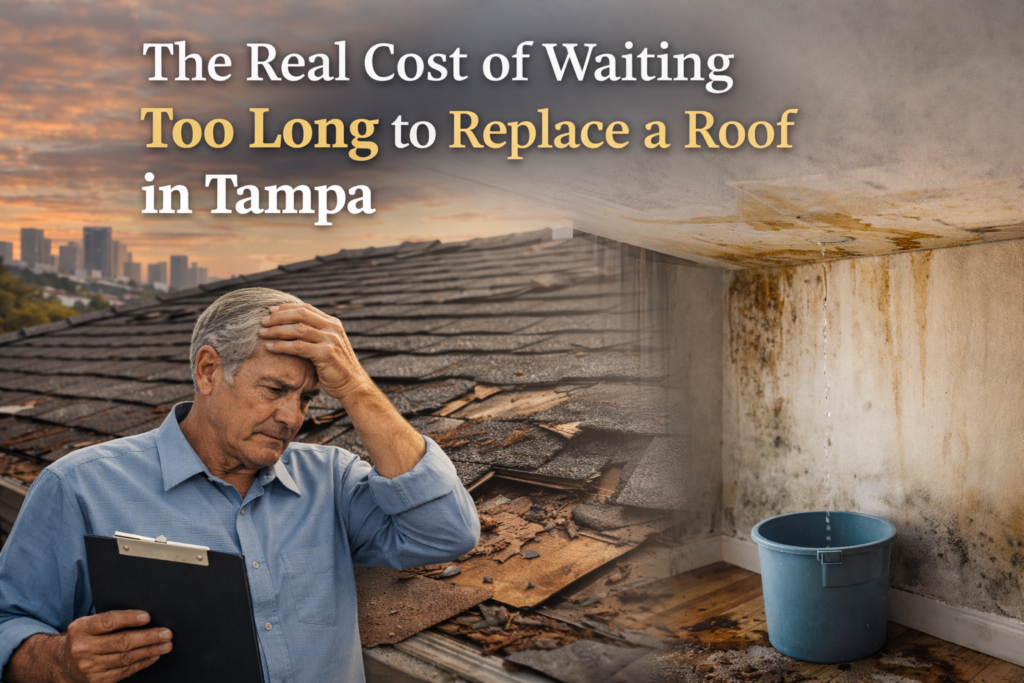
When many Tampa homeowners first notice roofing problems, the reaction is usually the same: can this wait a little longer?
It is a fair question. A roof replacement is a major expense, and most people do not want to move forward until they absolutely have to. But in many cases, waiting does not save money. It makes the final bill bigger. What starts as worn shingles, a small leak, lifted flashing, or visible aging can turn into attic moisture, damaged decking, stained ceilings, mold growth, insulation problems, and emergency repair work during the worst possible time of year.
At Tampa Premier Roofing, this is one of the most common patterns we see. Homeowners often delay replacement because they hope the roof can make it through one more storm season, one more year, or one more repair. Sometimes that works for a short period. Often, it does not. In a climate like Tampa, a roof that is already aging does not get a break. It keeps facing heat, humidity, heavy rain, wind, and storm exposure. That means the cost of waiting is not just the replacement itself. It is everything that happens while the roof continues to decline.
For many homeowners, the smartest move is not waiting until the roof completely fails. It is understanding the real financial risk of delay and acting before a manageable issue becomes a much bigger and more expensive one.
Why Homeowners Delay Roof Replacement
There are a few reasons almost every homeowner delays a roof replacement.
The first is obvious: cost. A new roof is a major project, and homeowners naturally want to get as much life out of the current roof as possible. If there is not an obvious leak pouring into the house, it is easy to tell yourself the issue is not urgent yet.
The second reason is uncertainty. Many people are not sure whether their roof truly needs replacement or whether a repair is still the better option. That uncertainty causes a lot of delay. Homeowners may see curling shingles, granule loss, old flashing, or areas of discoloration and still not know whether they are dealing with normal aging, repairable wear, or a roof that is close to failure.
The third reason is timing. People are already dealing with other expenses, travel plans, remodeling work, or busy schedules. Roofing gets pushed down the list until the home forces the issue.
The problem is that roofs rarely get better while you wait. In Tampa, aging roofs continue to take damage month after month. Sun breaks materials down. Humidity traps moisture where it does not belong. Storms test every weak area. By the time the issue becomes unavoidable, the project is often larger than it would have been earlier.
That is why reviewing your options for roofing services early is usually far less stressful than being forced into an emergency decision later.
Small Roofing Problems Rarely Stay Small
One of the most expensive assumptions a homeowner can make is believing that a small roofing issue will stay isolated.
A roof is a system. Once one part starts failing, the surrounding areas become more vulnerable. A few missing shingles may expose underlayment and create weak points for wind-driven rain. A cracked boot around a vent may allow moisture to enter slowly over time. Damaged flashing around chimneys, valleys, skylights, or wall transitions can lead to leaks that spread well beyond the original entry point.
That is one of the reasons roof problems are often misleading. The stain on the ceiling is not always directly below the area where the roof is compromised. Water travels. It can run along framing, spread through attic spaces, affect insulation, and show up far from the actual failure point.
Homeowners often think they are watching a minor issue. In reality, they may only be seeing the visible symptom of a much larger problem developing out of sight. By the time it becomes obvious from inside the home, there may already be damage to building materials that costs far more than the original roof issue would have.
Water Damage Is Where Costs Start Climbing Fast
When people think about a roof replacement, they usually think about shingles, tile, underlayment, labor, and materials. But one of the biggest financial consequences of waiting too long is not the roof itself. It is the water damage that happens after the roof starts letting moisture through.
Water intrusion can affect ceilings, drywall, paint, trim, flooring, insulation, framing, attic contents, and even electrical components in certain situations. A leak that feels small from the living room can still create a much larger issue above the ceiling line.
In Florida, moisture problems also carry another risk: mold. When warm temperatures and humidity combine with ongoing moisture intrusion, mold growth can develop faster than many homeowners expect. That turns a roofing problem into a roofing problem plus remediation, cleanup, and interior repair work.
Even if the visible roof damage seems limited, the damage inside the home may not be. That is why delaying replacement often costs more than people think. It is not only about replacing roofing materials later. It is about repairing everything the failing roof stopped protecting.
The Roof Deck Can Deteriorate Too
Another hidden cost of waiting too long is damage to the roof decking beneath the visible surface materials.
Shingles or tile may be the part homeowners see, but beneath those materials are structural components that matter just as much. Once water moves beyond the outer roofing layer, it can begin affecting the decking underneath. Over time, that can lead to soft spots, wood rot, deterioration, and weakened structural areas that have to be replaced during the project.
This is one of the biggest reasons an older roof can become much more expensive if the replacement is delayed too long. A roof replacement on a home with relatively intact decking is one thing. A roof replacement that also requires widespread decking replacement is something else entirely.
Waiting increases the odds that more of the roof system will need to be rebuilt once the job finally happens. That adds labor, materials, and cost, and it often comes as an unpleasant surprise to homeowners who assumed the visible roof was the only issue.
Emergency Repairs Are Usually More Expensive and More Stressful
Homeowners who delay replacement are much more likely to end up dealing with emergency repairs instead of a planned project.
A planned roof replacement gives you time. You can schedule an inspection, ask questions, compare options, review the condition of the roof, and move forward when it makes sense. Emergency situations are different. They usually happen after a storm, after a major leak, or after damage becomes impossible to ignore. At that point, the goal is not convenience or careful planning. The goal is damage control.
Emergency roofing work often involves temporary measures before permanent solutions can begin. Water may already be entering the home. Ceilings may be stained. Belongings may need to be moved. Homeowners may be trying to make fast decisions under pressure instead of making smart decisions from a position of control.
That is one of the biggest reasons delaying replacement is so risky. It increases the chance that the roof will choose the deadline for you. And when that happens, the situation is rarely cheaper, easier, or less stressful.
Tampa Weather Makes Delay More Dangerous
Roofing problems are expensive everywhere, but in Tampa, the weather raises the stakes.
Roofs here deal with intense UV exposure, sudden downpours, high humidity, heavy summer storms, and wind events that can exploit every weak point in an aging roof system. A roof that might limp along longer in a milder climate can fail much faster in Florida conditions.
That is especially true when a roof is already showing signs of age. Worn shingles are more likely to tear away in strong wind. Deteriorated sealants are more likely to fail during heavy rain. Older flashing details are more likely to allow water intrusion when storms hit hard and fast.
Homeowners often hope to “get through one more season.” But storm season is often exactly what turns a questionable roof into an urgent problem. If the roof is already near the end of its useful life, waiting through another Tampa season can be a gamble that becomes very expensive very quickly.
Insurance Is Not Always the Safety Net People Expect
Many homeowners assume that if the roof worsens later, insurance will simply cover the damage. That assumption can be risky.
Insurance outcomes often depend on the cause of the damage, the age and condition of the roof, and whether the issue is tied to a covered event or to long-term wear, deterioration, or neglected maintenance. If a roof is clearly at the end of its life and a problem develops later, the homeowner may face a more complicated claim process than expected.
Even when storm damage is involved, the pre-existing condition of the roof can still matter. That does not mean homeowners should panic. It means they should not assume waiting automatically puts all future risk on the insurance company.
Proactive replacement can reduce uncertainty. It can also help homeowners avoid the situation where an old roof, known wear, and delayed action all become part of the conversation after significant damage has already occurred.
Repeated Repairs Can Cost More Than One Proper Replacement
One of the most common financial mistakes homeowners make is spending money on repeated repairs when the roof is already near the end of its life.
A repair can absolutely make sense when the roof still has solid remaining life and the issue is isolated. But that is not the same as patching an aging roof over and over again because you are hoping to postpone replacement. In that situation, each repair may buy a little time without actually solving the broader problem.
Over time, those repair bills add up. And if the roof still ends up needing replacement soon anyway, the homeowner can wind up paying for both: the repeated temporary fixes and the eventual full replacement. That is one of the clearest examples of how waiting too long can cost more than acting sooner.
The real question is not whether a repair is cheaper than a replacement today. Of course it is. The real question is whether that repair makes financial sense given the age, condition, and remaining life of the roof as a whole.
Older Roofs Can Hurt Resale Value and Buyer Confidence
Another cost homeowners do not always think about is the effect an aging roof can have on resale.
If you plan to sell your home in the future, the roof matters. Buyers notice it. Inspectors notice it. Insurance carriers may notice it too. An older roof can create hesitation, lower offers, tougher negotiations, and requests for credits or replacement before closing.
Even if the rest of the property shows well, a visibly aging roof can make buyers nervous about what they will inherit after moving in. They may assume there are leaks, deferred maintenance, or near-term replacement costs. That can make the home harder to sell or reduce the seller’s leverage during negotiations.
In many cases, a strong roof helps support both curb appeal and buyer confidence. A roof that has clearly been pushed too long does the opposite.
The Most Expensive Roof Is Often the One Replaced Too Late
There is a big difference between getting full value out of a roof and squeezing every last month out of it no matter the risk.
Smart homeowners want to maximize the life of the roof. That makes sense. But the goal should not be using the roof until it starts damaging the rest of the home. Once that starts happening, the economics change. The roof is no longer just aging. It is becoming the reason other parts of the house need repair too.
That is why the most expensive roof is often not the one that gets replaced. It is the one that gets replaced too late.
By then, the homeowner may be paying for interior repairs, emergency service, damaged decking, insulation replacement, mold cleanup, and disruption that could have been reduced or avoided with earlier action.
Warning Signs You Should Not Ignore
While every roof is different, there are some common signs that homeowners should not brush aside.
- Recurring leaks or water stains inside the home
- Missing, curling, cracked, or deteriorated shingles
- Soft spots or signs of moisture in the attic
- Visible sagging or uneven roof areas
- Damaged flashing around penetrations or transitions
- Heavy granule loss or obvious signs of advanced aging
- Repeated repair history with new problems continuing to appear
- A roof that is already near or beyond its expected lifespan
These signs do not always mean immediate full replacement is the only answer, but they are strong signals that the roof should be professionally evaluated sooner rather than later.
Why Early Action Gives Homeowners More Control
One of the biggest advantages of acting earlier is control.
When you address roofing problems before they become emergencies, you get more time to understand the condition of the roof, weigh repair versus replacement, plan financially, and move forward on a timeline that works better for you. You are not making decisions in the middle of active leaks or after storm damage has already spread into the home.
You also get more clarity. A proper evaluation can help determine whether targeted repairs are still reasonable or whether replacement is the smarter long-term decision. That kind of clarity is much more useful when the homeowner is not under immediate pressure.
If you want to learn more about the company behind the work, visit the about us page. And if you want to see examples of completed work, take a look at our recent roofing projects.
When Replacement Is Usually the Smarter Financial Move
Every roof is different, but replacement often becomes the better financial choice when several of these factors are present at the same time:
- The roof is already near the end of its expected service life
- Leaks are recurring or appearing in multiple areas
- Repairs are becoming more frequent
- There is visible widespread wear instead of one isolated problem
- Storm season is approaching and the roof is already vulnerable
- Interior damage has started or the risk of it is growing
- The homeowner plans to stay in the home and wants long-term peace of mind
At that point, continuing to patch the roof may feel cheaper in the moment, but it may not be the smarter decision over the next several years.
Final Thoughts on the Cost of Waiting
Roof replacement is never a project homeowners look forward to. But waiting too long often makes it significantly more expensive than it needed to be.
In Tampa, roofs deal with conditions that can rapidly turn wear into damage. A small issue can become moisture intrusion. Moisture intrusion can become decking damage, mold, and interior repair costs. A repairable situation can become an emergency. And a decision that felt delayed to save money can end up costing much more.
The smartest time to evaluate a roof is usually before the home forces the issue. If your roof is aging, showing visible wear, or giving you reasons to question its condition, early action can give you more options and reduce the chance of bigger costs later.
Homeowners who want a better understanding of their options can start by reviewing roofing services, learning more about us, or visiting Tampa Premier Roofing to get a clearer picture of the next step before a manageable problem turns into a much bigger one.