

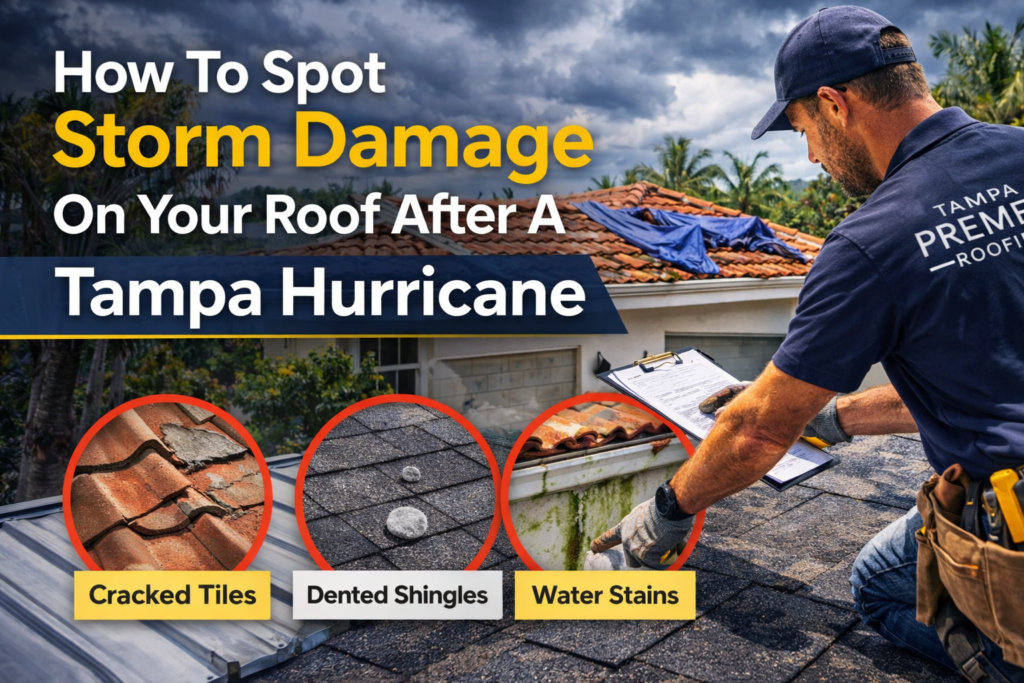
After a hurricane or tropical storm passes through Tampa, most homeowners do a quick walk around the yard, see the shingles are still on the roof, and assume everything is fine. That assumption costs thousands of dollars every year.
Storm damage to Tampa roofs is frequently invisible from the ground — and it compounds quickly. What looks like an intact roof from the street may have dozens of cracked or displaced shingles, compromised flashing, damaged underlayment, or punctures that allow water to infiltrate slowly over months before a leak ever shows up on your ceiling.
This guide covers exactly what to look for after a Tampa storm, how to document damage properly, what to do first, and why getting a professional inspection before calling your insurance company is the smartest move you can make. If you have experienced recent storm damage and want an expert eye on your roof, Tampa Premier Roofing offers free post-storm inspections with full photo documentation — typically scheduled within 48 hours.
Why Tampa Storm Damage Is So Often Missed
There are three reasons storm damage on Tampa roofs goes undetected:
First, much of the damage is not visible from the ground. Missing shingles are obvious. Cracked shingles, bruised shingles from hail impact, displaced flashing, torn pipe boot seals, and damaged ridge caps are nearly impossible to assess without getting on the roof or using a drone.
Second, some damage does not cause an immediate leak. A shingle that has been lifted and re-laid by wind may look intact from below but has broken the adhesive seal that holds it down — leaving it vulnerable to the next storm and slowly allowing moisture infiltration that shows up months later as a water stain.
Third, homeowners often wait too long. Florida’s hurricane season runs June through November, and many storms hit in rapid succession. Damage from one storm compounds with the next, and by the time a visible leak develops, the repair cost has often doubled or tripled from what it would have been if caught immediately.
What to Do Immediately After a Tampa Storm
Step 1: Stay Safe — Do Not Go on the Roof Yourself
After a major storm, the roof surface may be wet, debris-covered, and structurally compromised in ways that are not visible. Walking on a damaged roof can cause further damage and is genuinely dangerous. Assess what you can safely from the ground and from inside the attic — leave the roof surface inspection to a licensed professional with the right equipment.
Step 2: Document Everything From the Ground Immediately
Before anything is touched, cleaned up, or repaired — take photos. Walk the entire perimeter of your home and photograph:
- Any visible missing, displaced, or curling shingles
- Granules accumulated in gutters or at downspout exits
- Debris on the roof — branches, leaves, other material
- Any visible damage to fascia, soffits, gutters, or downspouts
- Water stains on exterior walls below the roofline
- Any visible damage to skylights, chimneys, or vents
These photos establish the condition of the roof immediately after the storm — before any temporary repairs are made — and are critical for supporting an insurance claim.
Step 3: Check the Attic
Before calling anyone, go into your attic with a flashlight and look for:
- Daylight visible through the roof decking — any light means a breach
- Active dripping or moisture on the decking or insulation
- Dark staining on the underside of the decking — indicates past or current moisture infiltration
- Sagging or soft spots in the decking
The attic often shows signs of damage before anything is visible on the interior ceiling. Finding moisture in the attic immediately after a storm confirms the roof has been breached and establishes urgency for both repairs and insurance documentation.
Step 4: Call a Licensed Roofing Contractor Before Your Insurance Company
This is the step most Tampa homeowners get backwards. The instinct is to call the insurance company first. The smarter move is to call a licensed contractor first to get an independent inspection and damage report before the insurance adjuster visits.
Here is why: insurance adjusters work for the carrier, not for you. Their job is to assess damage accurately, but they are not incentivized to find every damage point. A licensed contractor who has done a thorough inspection with photo documentation gives you an independent baseline to compare against the adjuster’s assessment — and something concrete to push back with if the adjuster’s estimate is low.
At Tampa Premier Roofing, we provide free post-storm inspections specifically designed to document damage in the detail insurance carriers require. We can schedule within 48 hours of a storm and be on-site before the insurance adjuster arrives.
What Storm Damage Looks Like on a Tampa Roof
Missing Shingles
The most obvious sign — bare patches on the roof deck where shingles have been completely blown off. Missing shingles leave the underlayment and decking directly exposed to the elements. Even a 24-hour delay in addressing missing shingles during Florida’s rainy season can result in significant water infiltration and decking damage.
Lifted or Curling Shingle Edges
Wind damage does not always remove shingles entirely. More commonly, hurricane-force gusts lift shingle edges and break the adhesive seal strips that hold them flat. From the ground these shingles may look intact. On inspection, they are loose, the seal is broken, and they will lift again — and likely blow off entirely — in the next storm.
Hail Damage — Bruising and Granule Loss
Tampa does not see large hail as often as states farther north, but tropical weather systems occasionally bring hail that damages asphalt shingles. Hail impacts leave circular bruise marks on shingles — areas where the granule coating has been knocked loose, leaving the asphalt layer exposed. These bruises are nearly invisible from the ground but clearly visible on close inspection.
Significant hail damage also shows up as heavy granule accumulation in gutters and at downspouts after a storm. If you are cleaning out gutters after a storm and find an unusual volume of granules — the small grit-like particles that look like coarse sand — that is a signal your shingles took a meaningful hit.
Damaged or Displaced Flashing
Flashing is the thin metal material installed at roof penetrations — around chimneys, skylights, vents, and at the joints where the roof meets walls. Flashing is one of the most common sources of post-storm leaks in Tampa. High winds can bend, lift, or entirely dislodge flashing, and the damage is almost impossible to see from the ground.
A chimney that looked perfectly fine before the storm may have its cap flashing peeled back by a 90 mph gust — and the first indication will be a water stain on the ceiling below it six weeks later after the next rainstorm.
Damaged Ridge Cap Shingles
The ridge cap — the row of shingles along the peak of the roof — is the most exposed part of any Tampa home during a hurricane. Ridge cap shingles take the full force of wind from both sides. They are frequently the first shingles to be lost or damaged in a major storm, and their damage creates a direct entry point for water into the most vulnerable part of the roof structure.
Damaged Pipe Boots and Vent Seals
Every plumbing vent and roof penetration on your Tampa home is sealed with a rubber boot or metal flashing. These components age faster than the roof itself in Florida’s UV-intense climate, and hurricane winds can tear, crack, or displace them. A failed pipe boot is one of the most common sources of localized roof leaks in Tampa homes after storms.
Soffit and Fascia Damage
While not part of the roof deck itself, damaged soffits and fascia boards from storm winds create entry points for moisture and pests. Wind-driven rain can push significant water volume under lifted or damaged soffits, leading to rot in the roof’s structural framing over time. Damage to these components is often visible from the ground and should be documented and repaired promptly.
Gutter Damage
Gutters bent, pulled from the fascia, or clogged with storm debris prevent proper drainage from the roof after subsequent rain events. Standing water at the roofline is a direct threat to fascia integrity and can cause water to back up under shingles at the eaves — especially relevant during Tampa’s heavy afternoon downpours after a major storm.
The Insurance Claim Timeline for Tampa Storm Damage
Once you have your contractor’s inspection report in hand, here is how the insurance process typically works in Florida:
- File your claim promptly — Florida carriers must acknowledge claims within 14 days and make a coverage decision within 90 days, but filing quickly keeps your options open
- Request to be present during the adjuster’s inspection — bring your contractor’s report and walk the adjuster through every damage point documented
- Do not accept a settlement offer at the time of the adjuster visit — review it carefully and compare it against your contractor’s estimate before agreeing to anything
- If the adjuster’s estimate is significantly lower than your contractor’s, request a re-inspection or invoke the appraisal process — you have the right to both
- Do not begin permanent repairs until your claim is filed and your insurer has had the opportunity to inspect — making repairs before the adjuster visits can complicate your claim
- Temporary repairs to prevent further damage are acceptable and should be documented with photos and receipts
Why Getting a Professional Inspection Matters More Than Ever in Florida
Florida’s insurance market has shifted significantly against homeowners in recent years. Carriers have more tools to limit payouts, and the window for filing a valid storm damage claim has tightened. Getting a professional inspection immediately after a storm — before the damage compounds, before the next storm hits, and before the insurance adjuster visits — is the single most important step a Tampa homeowner can take to protect their claim and their home.
At Tampa Premier Roofing, our post-storm inspections include a full photo report of every damage point we identify — the format insurance carriers need to process claims accurately. We schedule within 48 hours, we work alongside adjusters, and we provide honest assessments of what needs immediate attention versus what can wait.
Schedule your free post-storm inspection here — we serve Tampa, Brandon, Riverview, and surrounding areas.
Frequently Asked Questions
Q: How soon after a Tampa storm should I have my roof inspected?
As soon as possible — ideally within 24–48 hours. Florida’s rainy season means a second storm can hit days after the first, and damage that compounds from multiple events is harder to document for insurance purposes. Waiting also allows moisture infiltration to begin degrading the decking and framing beneath visibly damaged areas. Tampa Premier Roofing offers free post-storm inspections typically scheduled within 48 hours.
Q: My roof looks fine from the ground. Do I still need an inspection after a storm?
Yes. The most common and costly storm damage — lifted shingles with broken seals, cracked or bruised shingles, damaged flashing, displaced pipe boots — is nearly impossible to assess from the ground. A significant percentage of Tampa roofs that appear intact after a hurricane have documented damage visible only on close inspection. If a major storm has passed over your home, an inspection is the only way to know for certain.
Q: Should I call my insurance company or a roofer first after storm damage?
Call a licensed roofer first. Getting an independent inspection and damage report before the insurance adjuster visits gives you documentation to compare against the adjuster’s assessment — and a credible basis to push back if the carrier’s estimate is low. Insurance adjusters work for the carrier. Your contractor works for you.
Q: Does filing a storm damage claim in Florida raise my insurance rates?
It can, but for significant storm damage the cost of not filing almost always exceeds the risk of a rate increase. Florida’s market is complicated — some carriers raise rates after claims, others do not, and the impact depends on your specific policy and carrier. Talk to your agent about the likely impact before filing if you are on the fence about a smaller claim. For major damage, file.
Q: What is temporary repair and does it affect my insurance claim?
Temporary repairs are measures taken to prevent further damage before permanent repairs are completed — tarping exposed areas, covering broken windows, clearing debris from gutters. Florida insurance policies typically require you to take reasonable steps to prevent further damage after a storm, so temporary repairs are not only acceptable but may be required. Document everything with photos and keep all receipts — these costs are often reimbursable under your policy.
Q: How long does a Tampa roof insurance claim typically take?
Florida law requires carriers to acknowledge claims within 14 days and make a coverage decision within 90 days. In practice, straightforward claims with clear documentation can resolve in 4–8 weeks. Claims after a major storm event that affects a large portion of the Tampa area take longer as adjusters are stretched. Having a complete, professional inspection report from the start helps speed up the process significantly.
Q: Can Tampa Premier Roofing help me through the entire insurance claim process?
Yes. Tampa Premier Roofing provides free post-storm roof inspections with full photo documentation, attends adjuster inspections on your behalf, and provides detailed reports in the format Florida carriers require. We work with all major carriers including State Farm, Allstate, Progressive, Liberty Mutual, USAA, Farmers, Nationwide, and Citizens.